
What Size Dumpster Do I Need in Howell, MI?
The most expensive sizing mistake around here is ordering by volume when the real limit is weight. Here's how to get it right first time.
In this guide
- The question that actually matters
- Weight versus volume
- The Michigan clay factor
- New builds versus older homes
- Size by size, honestly
- Project-by-project recommendations
- What the site will allow
- Getting the answer in one call
Almost everybody gets the volume roughly right when they estimate a container. What they get wrong is assuming volume is the constraint at all.
The question that actually matters
When somebody rings and asks for a 20 yard, the useful reply is not "certainly, when would you like it." It is "what is going in it?" That answer changes the recommendation more than any estimate of cubic yardage.
Every roll-off has two limits: the space inside it, and a tonnage allowance set by what the truck can legally carry and what the disposal facility charges by weight. You reach whichever comes first, and on a lot of jobs around here the second arrives long before the first.
Weight versus volume
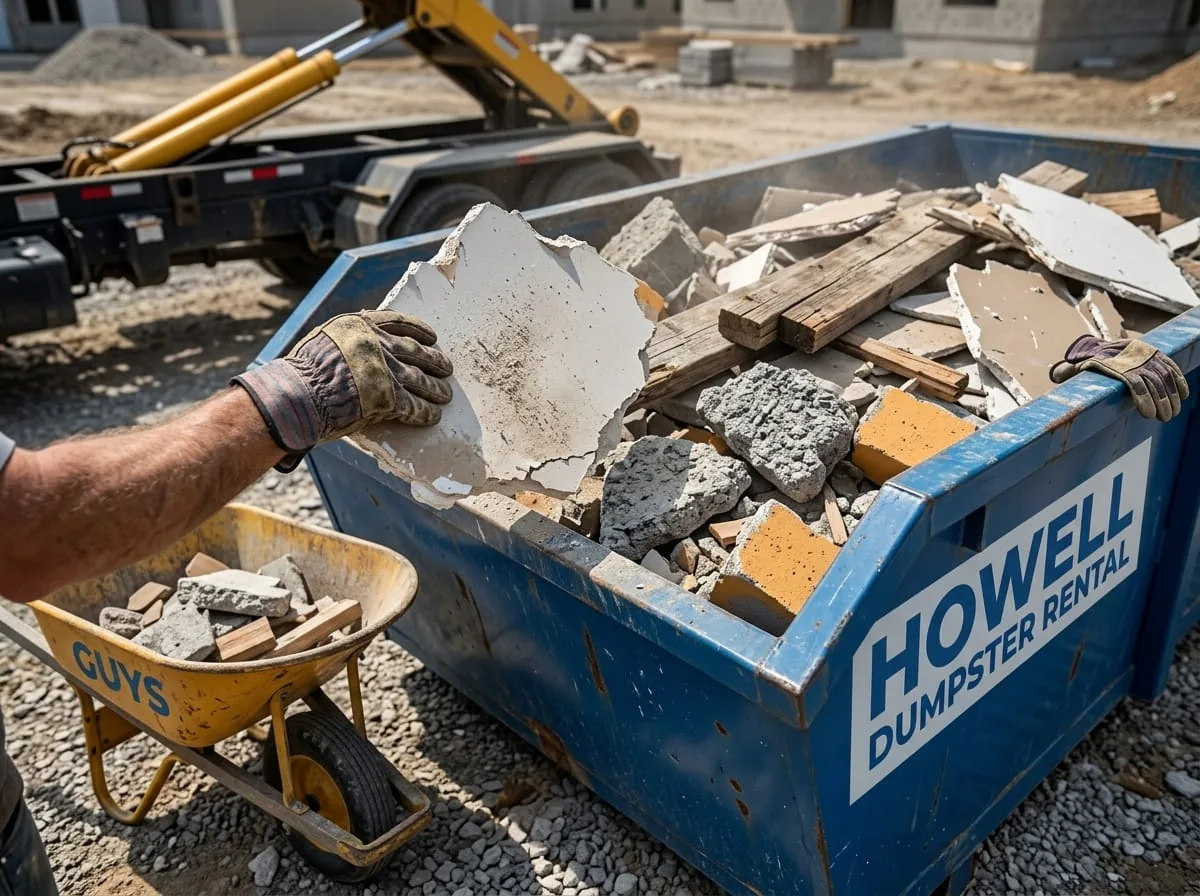
Materials vary enormously in density. A cubic yard of loose household clutter might weigh a couple of hundred pounds. A cubic yard of broken concrete or wet clay weighs closer to two tons.
Roughly from lightest to heaviest per cubic yard: packaging and insulation, furniture and household contents, framing timber, drywall, decking, carpet, asphalt shingles, tile and mortar, brick and block, concrete, stone, and wet clay.
If your project sits in the top half of that list, order by volume and you will be fine. If it sits in the bottom half, order by volume and you will be paying overweight charges on a container that looks two-thirds empty.
The Michigan clay factor
This is the local wrinkle worth its own section. Southern Michigan sits on glacial till - a dense mix of clay, sand and cobble - and that soil is heavy. When you excavate a footing, a basement, a pole-barn slab or a drainage run, the spoil that comes out is far heavier per cubic yard than the construction debris from the same job.
Any job that moves earth produces spoil that will dominate a disposal bill by weight, and wet clay is dramatically heavier than dry. It belongs in its own dedicated 10 yard container, never mixed into general debris, and it wants to be as dry as the schedule allows.
Underestimating clay weight is probably the single most common sizing mistake we see on local excavation and grading jobs.
New builds versus older homes
Livingston County is growing, so a lot of the work is new construction and remodeling of newer homes across Genoa, Oceola, Hartland and the Brighton area. That housing produces bulky, light debris - drywall over stud, engineered flooring, MDF cabinetry, packaging. You fill the box before you trouble the scale, so the larger container is usually right.
Older homes - around historic downtown Howell, the older parts of Brighton and Fowlerville, the lake cottages - give up denser material: heavier framing, plaster in the oldest, layered flooring, sometimes masonry and fieldstone. That wants a smaller container filled properly.
Same square footage, opposite recommendation, depending on the age of the house. That is why the questions matter more than a volume estimate.
Size by size, honestly
10 yard. Twelve feet, one to two tons. The heavy-material container. Concrete, brick, stone, tile and clay go here regardless of quantity. Also the one that fits tight, downtown and lake-lot driveways.
15 yard. Fourteen feet, two to three tons. The one we recommend most often for dense demolition and renovation debris.
20 yard. Twenty-two feet, three to four tons. Most requested, right about half the time. Kitchen and bathroom together, a multi-layer roof, a large clearance.
30 yard. Six-foot walls, four to five tons. A volume container. Whole-house clearances, new construction framing, pole-barn clearances.
40 yard. Eight-foot walls, five to six tons. Commercial work almost exclusively.
Project-by-project recommendations
Single bathroom remodel: 10 yard.
Kitchen alone: 15 yard in an older home, 20 in a newer one.
Kitchen and bathroom together: 20 yard.
Whole-house flooring: 20 yard, and tell us carpet or tile.
Asphalt roof tear-off: depends on squares and layers. Single layer, 15 yard. Multiple layers, 20 and expect it to look half empty when full.
Fully furnished family home clearance: 30 yard.
New construction or major addition: 30 yard, plus a 10 yard for the clay fill.
Patio, slab, footing or grading spoil: 10 yard, level, probably more than one.
What the site will allow
Sometimes the material says one thing and the site says another.
A 30 yard needs around seventy feet of straight approach. A 10 yard needs about forty-five. On a short driveway, a tight downtown Howell street or a wooded lake lot, the larger container physically cannot be placed however much material you have.
Overhead clearance is the constraint people forget. The truck bed rises well above roof height when it tips - roughly twenty-three feet of clear air is needed. On the tree-shaded older streets and the wooded lake lots around Pinckney and Hamburg, mature limbs stop more deliveries than narrow driveways do.
The fix is simple. Stand in the street, photograph the intended spot with the sky in frame, and send it when you call.
Getting the answer in one call
Have four things ready and this takes ninety seconds: what the project is, roughly when the house was built, what the main material will be, and a photo of the spot from the street.
You will get a size recommendation and a flat rate covering delivery, seven days, collection, out-of-county disposal, and a tonnage allowance. If we think you have asked for the wrong container we will say so, including when that means selling you something cheaper.
Book a container in Howell
One flat rate covering delivery, seven days, pickup and disposal.
(517) 273-2266Questions readers ask about this
What is the most common dumpster size in Howell, MI?
The 20 yard is requested most often. The 15 yard is what we actually recommend most often for dense demolition debris, since it reaches a weight limit before it fills the container, making it cheaper for heavy material.
What size do I need for a new-construction job?
Usually a 30 yard for the bulky framing and drywall waste, plus a separate 10 yard for the heavy clay fill from footings and grading. Keeping the clay separate keeps the whole job cheaper.
Why does Michigan clay need its own container?
Because the glacial clay and till here is dense and heavy, especially wet, so it hits the truck's legal weight limit while the box looks half full. Mixed into general debris it raises the disposal cost of the whole load. Keep it separate and as dry as you can.
What happens if I go over the weight allowance?
You pay the per-ton overage rate quoted at the start and get a copy of the scale ticket. The arithmetic is straightforward and verifiable, so there are no surprises.