
Lake Property Cleanup Around Livingston County's Lakes
Livingston County is lake country, and lakeside property brings its own kind of cleanup work. Placement, timing and what goes in the box all shift a little on the water.
In this guide
- Why lakeside work is different
- Placement on a sloped, wooded lot
- Docks, decks and treated lumber
- Seasonal turnover and cottages
- Tarped loads and the wellhead areas
- Keeping debris out of the water
- Booking a lakeside container
Livingston County is lake country - the chain of lakes around Pinckney and Hamburg, Lake Chemung near Howell, and dozens of smaller lakes scattered across the townships. Those lakes shape the county's weekends, its property market and, for us, a distinct kind of cleanup work. Lakeside jobs are not quite like the ones a few miles inland, and knowing the differences makes them go smoothly.
Why lakeside work is different
Three things set lakeside property apart. The lots are often sloped and heavily wooded, which complicates placement. The structures are different - docks, boathouses, decks and lake-facing rooms that get renovated more often than the rest of the house. And the ownership turns over seasonally, with cottages and second homes changing hands and getting cleared out between owners.
Each of those shifts how a container job is planned, and a company that works the lakes regularly plans for them rather than being surprised.
Placement on a sloped, wooded lot
The single biggest lakeside difference is placement. Waterfront lots frequently slope toward the water, the driveways are often long and tree-lined, and the last thing anyone wants is a truck rutting a landscaped drive or a container sitting where it blocks the view everyone paid for.
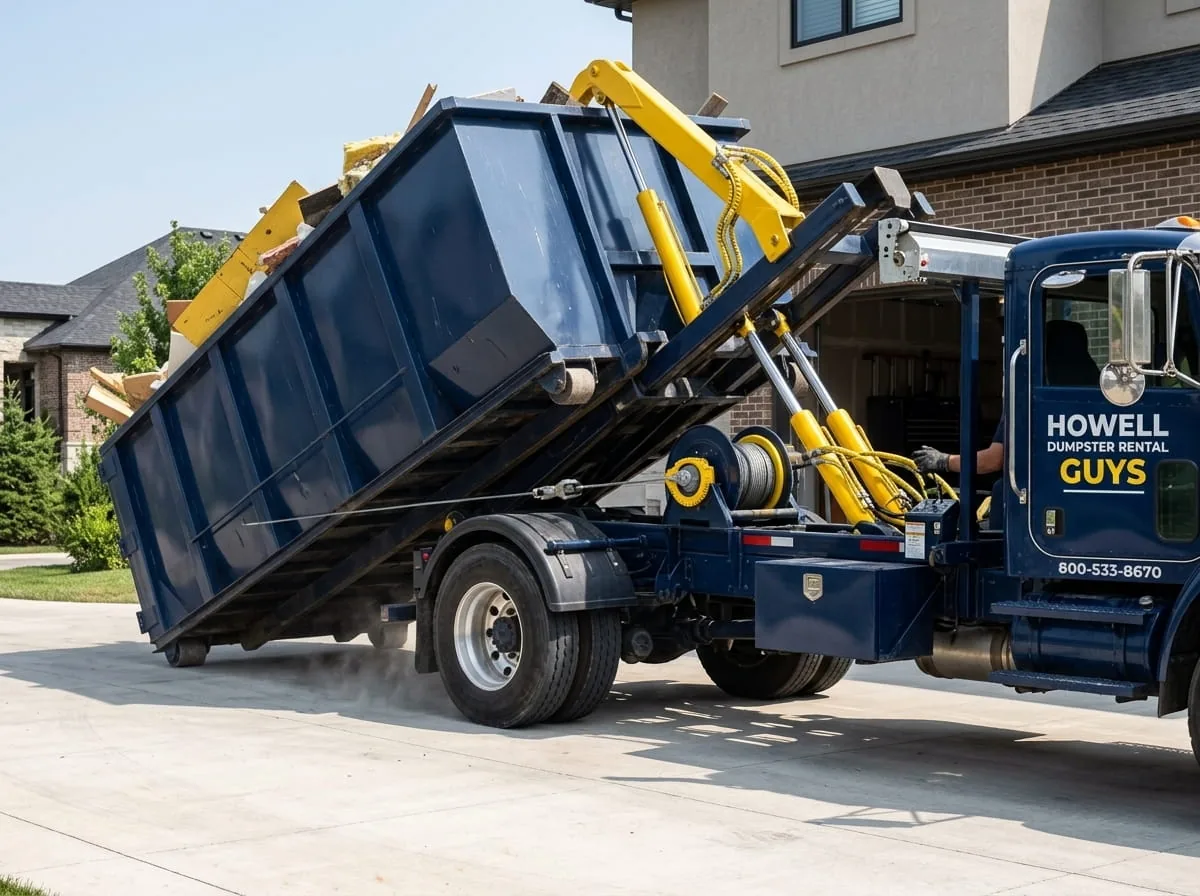
We plank under the container on every delivery to protect the surface, and on a sloped lot we take extra care to set it level and stable. Overhead limbs are the usual obstacle - the truck bed rises high when it tips, so mature lakeside canopy stops more deliveries than tight driveways do. A photo from the street with the sky in frame, sent when you book, saves a wasted trip.
Docks, decks and treated lumber
A lot of lakeside work is dock and deck rebuilds, and that means treated lumber. The good news is that treated lumber goes in the roll-off just fine - it does not need special handling for a standard container load. Old decking, dock boards, railings and boathouse framing all go in.
The thing to watch is weight and volume together: a big dock or deck tear-out produces a lot of dense, waterlogged lumber, which is heavier than dry framing. Tell us the rough size of the structure coming out and we will size for the weight, not just the visible pile.
Seasonal turnover and cottages
Lake property changes hands and changes use more than inland housing - cottages, seasonal rentals, second homes being cleared between owners. That produces cleanout work with its own timing, often compressed into the shoulder seasons before or after summer.
For a seasonal cleanout we can set up an extended rental on a daily rate, so you are not rushing to clear a property against a container's collection date. And because demand around the lakes spikes in spring and fall, booking ahead for those windows is worth it.
Tarped loads and the wellhead areas
Every load we haul leaves tarped and secured - and around the lakes this matters more than usual. The MHOG townships - Marion, Howell, Oceola and Genoa - have wellhead protection areas established to protect the groundwater, and much of the county's drinking water comes from wells. A tarped load means nothing blows off the truck into a ditch that drains toward the water table or the lakes.
It is good practice everywhere and genuinely important here, so we secure every haul as standard.
Keeping debris out of the water
Lakeside cleanup carries a responsibility inland jobs do not: keeping debris out of the lake. A container placed near the water needs loading with a little care so nothing spills down the slope, and demolition of a dock or lakeside structure should be planned so material comes up the bank rather than going into the water.
This is common sense, but it is worth stating, because the lakes are a genuine local asset and the wellhead areas make groundwater protection a shared concern. We place and load with the shoreline in mind, and we would rather spend a minute positioning the container right than see anything end up where it should not.
Booking a lakeside container
When you call about a lakeside job, tell us what it is - dock rebuild, deck tear-out, seasonal cleanout, lake-house remodel - and describe the lot: the slope, the driveway, the trees. Send a photo from the street. We will size the container for the material, pick a placement that protects the drive and the view, set an extended rental if it is a seasonal clear-out, and tarp every load for the trip up from the water. Lakeside work is a specialty here, because in Livingston County the lakes are never far away.
Book a container in Howell
One flat rate covering delivery, seven days, pickup and disposal.
(517) 273-2266Questions readers ask about this
Can you place a container on a sloped lakeside lot?
Yes, it is a specialty. We plank to protect the drive and take extra care to set the container level on a slope. Overhead limbs are the usual obstacle, so send a photo from the street with the sky in frame when you book.
Can treated dock and deck lumber go in the dumpster?
Yes. Treated lumber goes in a standard roll-off just fine - old decking, dock boards, railings and boathouse framing all go in. Waterlogged lumber is heavy, though, so tell us the rough size of the structure so we size for weight.
Can I keep a container for a seasonal cottage cleanout?
Yes. For seasonal and cottage clearing we set up extended rentals on a daily rate, so you are not rushing against a collection date. Book ahead for the spring and fall windows, when lake demand spikes.
How do you protect the lakes and groundwater?
We place and load with the shoreline in mind, position the container so nothing spills down the slope, and tarp every load. The MHOG wellhead protection areas make groundwater protection a real local concern, so secured loads matter here.